

Significant Regulatory Development for ESG Ratings in Marketing Communications
Thursday, 26 June 2025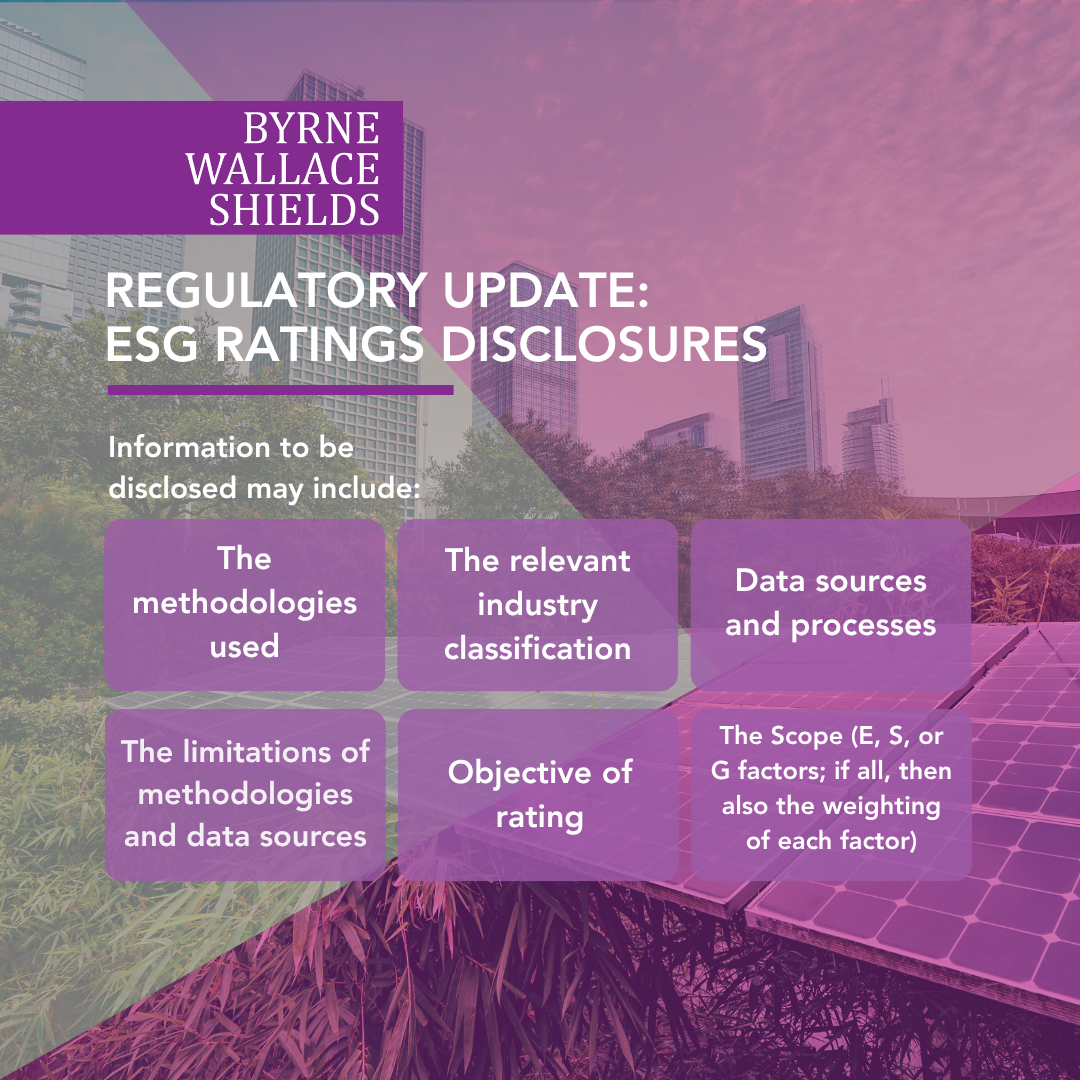
We wish to draw your attention to Regulation (EU) 2024/3005 on the transparency and integrity of Environmental, Social and Governance ("ESG") rating activities (the "ESG Ratings Regulation"), which introduces a new regulatory framework regarding the use of ESG ratings in marketing communications and will apply from 2 July 2026. This has implications for fund managers to the extent that ESG ratings (be they proprietary or issued by a third party) are used in external marketing communications, as it requires fund managers to maintain prescribed ESG ratings disclosures on their website and to provide investors with a link to these disclosures in the relevant marketing communications.
An ESG rating broadly includes an opinion, score or combination of both regarding a company, financial instrument or other rated item's ESG characteristics, risks or impacts where that assessment is based on an established methodology and defined rating categories. Although “marketing communications” are not defined in the ESG Ratings Regulation, the industry view is that this term encompasses any investor-facing communication that promotes or refers to a fund, including websites, factsheets, presentations, advertisements and social media content. Prospectuses, KIDs/KIIDs and periodic reports do not fall in scope of the ESG Ratings Regulation. To note, the ESG Ratings Regulation will not apply to ESG ratings produced for internal use.
Next Steps
We recommend liaising with the fund management company to (i) review and assess marketing communications to identify whether any ESG ratings are referenced and (ii) ascertain what website disclosures need to be created. Information to be disclosed may include:
- The methodologies used;
- The relevant industry classification;
- Data sources and processes;
- The limitations of methodologies and data sources;
- Objective of rating, and
- The scope (E, S, or G factors; if all, then also including the weighting of each factor).
If you would like to discuss in greater detail how the ESG Ratings Regulation may impact your business, please contact Doireann O'Daly, Partner or David Naughton, Head of the Investment Funds and Financial Services Regulation Team.